Bamboo vs Cotton Socks: Which Is Better?
The bamboo vs. cotton sock debate is one of the most common questions in footwear, and for good reason. Both materials have passionate advocates, legitimate benefits, and real limitations. But the answer isn’t as simple as “one is better than the other” — it depends on what you need from your socks, how you use them, and what your priorities are.
In this comprehensive comparison, we’ll break down the science, comfort, durability, environmental impact, and pricing of bamboo and cotton socks so you can make an informed choice. We’ll also recommend specific products from Oulaf for each category, so you can try the winner for yourself.
Understanding the Materials: What Are Bamboo and Cotton Socks Actually Made Of?
Cotton Socks
Cotton is one of the oldest textile fibers in human history, dating back over 7,000 years. Cotton socks are made from the fluffy bolls of the cotton plant (Gossypium), which are harvested, spun into yarn, and knitted into socks. The fiber is naturally soft, breathable, and easy to dye, which is why cotton socks come in virtually every color and pattern imaginable.
Key characteristics of cotton:
- Softness — naturally gentle against the skin
- Breathability — allows air circulation around the foot
- Absorbency — cotton can absorb up to 27 times its weight in water
- Hypoallergenic — rarely causes skin irritation
- Biodegradable — breaks down naturally over time
Bamboo Socks
Bamboo socks are typically made from bamboo viscose (also called bamboo rayon), which is a semi-synthetic fiber produced by dissolving bamboo pulp into a viscose solution and then extruding it into fibers. While the process is industrial, the raw material — bamboo grass — grows remarkably fast without pesticides or excessive water.
Key characteristics of bamboo viscose:
- Silk-like softness — often compared to cashmere in feel
- Natural antimicrobial — bamboo kun (a bio-agent) resists bacterial growth
- Moisture-wicking — pulls sweat away from the skin
- Thermoregulating — keeps feet cool in summer and warm in winter
- UV protective — naturally blocks some ultraviolet radiation
Head-to-Head Comparison
| Feature | Cotton Socks | Bamboo Socks | Winner |
|---|---|---|---|
| Softness | Good — soft and comfortable | Excellent — silky, luxury feel | Bamboo |
| Breathability | Very good — natural airflow | Excellent — superior moisture management | Bamboo (slight edge) |
| Moisture Management | Absorbs well but holds moisture | Wicks moisture AND dries faster | Bamboo |
| Odor Resistance | Limited — absorbs odors | Strong — natural antimicrobial properties | Bamboo |
| Warmth | Good insulator when dry | Better insulator — thermoregulating fibers | Bamboo (winter), Tie (summer) |
| Durability | Good — especially combed cotton | Moderate — can thin with heavy use | Cotton |
| Price | $5–$25 per pair typically | $10–$30 per pair typically | Cotton |
| Skin Sensitivity | Good — hypoallergenic | Excellent — gentle on eczema and sensitive skin | Bamboo |
| Environmental Impact | High water/pesticide use (conventional) | Fast-growing, less water, but chemical processing | Depends on sourcing |
| Dye & Print Quality | Excellent — vibrant colors, sharp prints | Good — holds dye well but slightly less vibrant | Cotton (slight edge) |
Deep Dive: When Cotton Socks Are the Better Choice
1. For Heavy-Duty Daily Wear
If you need socks that will withstand rigorous daily use — think construction workers, hikers, or anyone who puts serious miles on their feet — cotton’s durability advantage matters. High-quality combed cotton with reinforced heels and toes holds up better over hundreds of wash cycles than bamboo viscose.
The Star-Pattern Cotton Socks Multipack ($24.99) are a great example of cotton done right — sturdy construction with a fun design that maintains its shape and color over time.
2. For Allergy-Prone or Extremely Sensitive Skin
While bamboo is generally hypoallergenic, some people react to the chemical processing involved in creating bamboo viscose. If you have extremely reactive skin, pure organic cotton is the safest bet. Look for GOTS-certified organic cotton socks, which are processed without harsh chemicals.
3. When Print Quality Matters
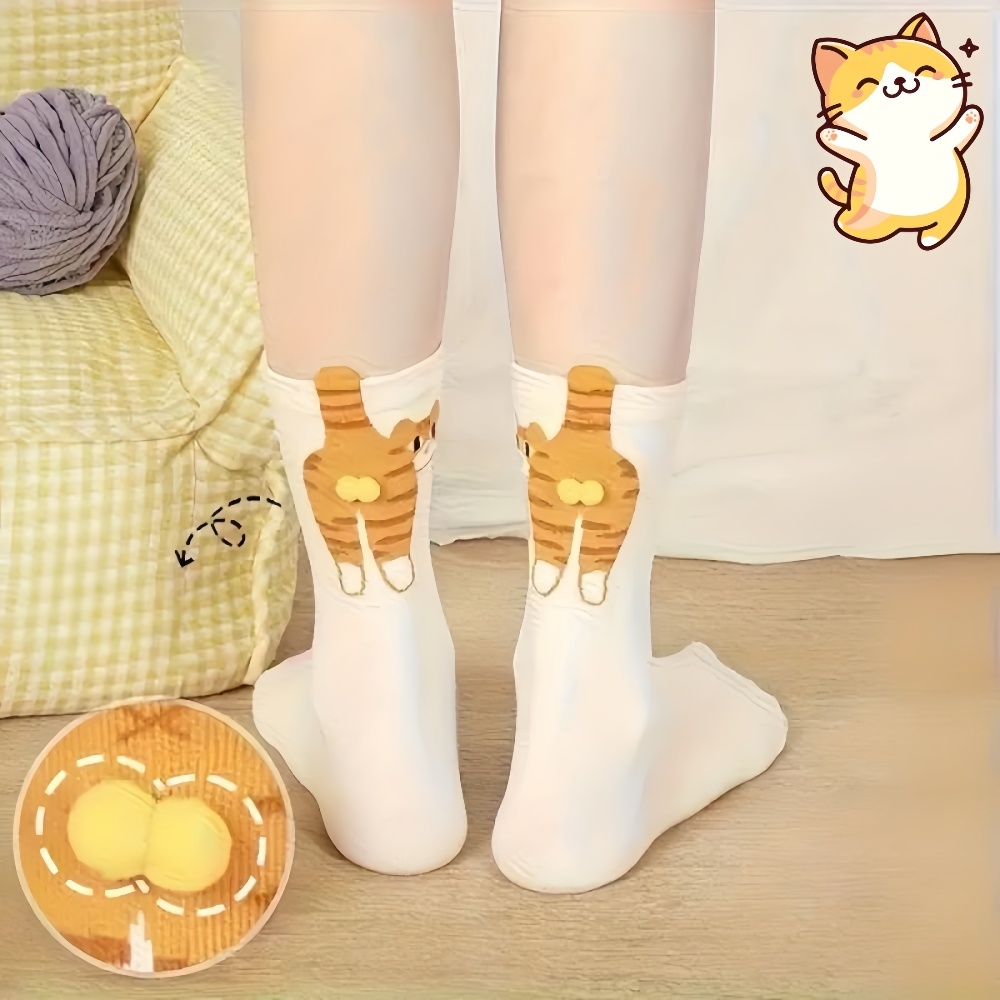
Cotton fibers accept dye more readily than bamboo viscose, resulting in sharper, more vibrant prints. If you’re buying novelty socks or patterned dress socks, cotton often delivers better visual results. The detailed prints on novelty socks — like the Cute Cat Socks With Balls — benefit from cotton’s superior dye absorption.
4. On a Tight Budget
Cotton socks are generally more affordable, with quality options available at lower price points. If you need to stock up on everyday socks without breaking the bank, cotton offers the best value per pair.
Deep Dive: When Bamboo Socks Are the Better Choice
1. For People with Sweaty Feet
This is bamboo’s killer advantage. Cotton absorbs sweat but holds it against the skin, creating a damp environment where bacteria thrive. Bamboo wicks moisture away from the skin and dries significantly faster. If you deal with sweaty feet, bamboo socks are transformative.
The Everyday Bamboo Casual Socks ($16.99) are designed for exactly this — all-day comfort with moisture management built into the fabric.
2. For Odor Control
Bamboo’s natural antimicrobial properties (from bamboo kun) actively resist the bacteria that cause foot odor. Studies show bamboo fabric reduces bacterial growth by up to 70% compared to cotton. If foot odor is a concern — for you or as a gift — bamboo is the clear winner.
The Copper Anti-Odor Wellness Socks ($16.99) take this a step further by combining bamboo-like anti-odor technology with copper fibers for maximum freshness.
3. For Sensitive Skin and Conditions Like Eczema
Bamboo viscose has an incredibly smooth fiber surface with no sharp edges to irritate skin. People with eczema, psoriasis, or general skin sensitivity often report significant comfort improvements when switching to bamboo socks. The fabric glides over the skin rather than creating friction.
4. For Temperature Regulation
Bamboo fibers have a unique micro-structure with gaps and holes that allow temperature regulation. In cold weather, these gaps trap warm air close to the skin. In hot weather, they allow heat to escape. This makes bamboo socks a true four-season option — something cotton can’t match as effectively.
The Men’s Breathable Bamboo Dress Socks ($16.99) exemplify this advantage — keeping feet comfortable whether you’re in an air-conditioned office or walking through summer heat.
5. For Eco-Conscious Consumers
Bamboo grows up to 3 feet per day without pesticides and requires roughly one-third the water of cotton. While the viscose processing uses chemicals, closed-loop production methods are becoming more common, and bamboo’s overall environmental footprint is generally lower than conventional cotton. If sustainability matters to you, bamboo is the more responsible choice.
The Hybrid Approach: When You Don’t Have to Choose
Many modern socks combine cotton and bamboo fibers to capture the best of both worlds. A 60% bamboo / 40% cotton blend, for example, gives you the softness and moisture management of bamboo with the durability of cotton. This is often the smartest choice for everyday wear.
The Men’s Bamboo Fiber Socks Multipack ($16.99) offers excellent value as a daily rotation — bamboo-blend construction at an accessible price point.
Similarly, the Bamboo-Fiber Summer Boat Socks ($16.99) blend bamboo’s cooling properties with structural reinforcements for a no-show sock that stays put and stays fresh all day.
Specialty Considerations: Compression and Performance
For compression socks, bamboo’s natural elasticity and moisture management make it an excellent base fiber. The Bamboo Compression Socks ($27.99) leverage bamboo’s antimicrobial properties alongside graduated compression for people who need both support and freshness — office workers, travelers, nurses, and athletes alike.
For pure athletic performance, cotton’s absorbency can actually be a liability — wet cotton socks become heavy, lose their shape, and increase friction (leading to blisters). In performance contexts, bamboo or synthetic blends generally outperform cotton.
Care and Longevity: How to Make Your Socks Last
Regardless of material, proper care dramatically extends sock life. Here’s a comparison:
| Care Factor | Cotton Socks | Bamboo Socks |
|---|---|---|
| Washing Temperature | Warm (40°C/104°F) safe | Cool to warm (30-40°C/86-104°F) |
| Drying | Tumble dry low or line dry | Line dry recommended — heat degrades fibers |
| Bleach | Occasional chlorine bleach OK | Avoid — damages bamboo fibers |
| Fabric Softener | Optional | Avoid — reduces moisture-wicking ability |
| Expected Lifespan | 1-2 years with regular rotation | 6-18 months with regular rotation |
Pro tip: Wash both cotton and bamboo socks inside out to protect the outer surface from friction damage. Use a mesh laundry bag to prevent socks from stretching or getting caught on other items.
The Verdict: Which Should You Buy?
Here’s our summary recommendation based on your priorities:
- If comfort is #1: Choose bamboo — the silky feel is unmatched
- If odor control matters: Choose bamboo — natural antimicrobial properties
- If you need durability: Choose cotton — holds up to heavy wash/wear cycles
- If you have sensitive skin: Choose bamboo — smoother fibers, less irritation
- If budget is tight: Choose cotton — more affordable options available
- If you want the best of both: Choose a cotton-bamboo blend
- If you sweat a lot: Choose bamboo — superior moisture management
- If you want vibrant prints: Choose cotton — better dye absorption
Ultimately, there’s no single “right” answer — only the right answer for you. The best sock drawer contains a mix of both materials, chosen for specific purposes and occasions.
Building the Perfect Sock Drawer: A Material Strategy
Here’s how a well-organized sock drawer might look using both materials strategically:
- Daily work socks: Everyday Bamboo Casual Socks — moisture management for long days
- Heavy-duty outdoor socks: Cotton or wool-blend — durability for rugged use
- Dress socks: Men’s Breathable Bamboo Dress Socks — professional look with comfort
- Fun/novelty socks: Cotton — better print quality for patterns
- Compression socks: Bamboo Compression Socks — comfort + support
- Summer no-show socks: Bamboo-Fiber Summer Boat Socks — cool and invisible
Shop the Look: Featured Bamboo & Cotton Socks
| Product | Material | Price | Best For |
|---|---|---|---|
| Everyday Bamboo Casual Socks | Bamboo | $16.99 | Daily comfort, moisture management |
| Men’s Breathable Bamboo Dress Socks | Bamboo | $16.99 | Office wear, professional settings |
| Bamboo-Fiber Summer Boat Socks | Bamboo | $16.99 | Summer, loafers, no-show needs |
| Men’s Bamboo Fiber Socks Multipack | Bamboo blend | $16.99 | Everyday value multipack |
| Bamboo Compression Socks | Bamboo | $27.99 | Compression + freshness |
| Copper Anti-Odor Wellness Socks | Copper blend | $16.99 | Maximum odor control |
| Star-Pattern Cotton Socks Multipack | Cotton | $24.99 | Durability + fun pattern |
| Cute Cat Socks With Balls | Cotton | $16.99 | Novelty prints, cat lovers |